Introduction
Waste materials, extra fluid, and electrolytes cannot be eliminated from the bloodstream when the kidneys fail due to chronic kidney disease (CKD). This dangerous accumulation may result in nausea, edema, fatigue, or even heart issues.
Hemodialysis is a lifesaver for millions of patients worldwide who have end-stage renal disease.
The dialyzer, an artificial kidney device that replaces these vital filtration functions to help patients feel better and live longer, is the cornerstone of this treatment.
This thorough book offers concise, fact-based explanations of dialyzers, their inner workings, essential parts, types that are available, clinical significance, and new developments.
You’ll find useful information here to better understand this vital medical technology, whether you’re a healthcare professional reviewing the basics, a dialysis patient navigating treatment options, or a caregiver supporting a loved one.
Dialyzer Basics
When a patient’s natural kidneys are unable to filter waste materials, extra fluid, and electrolytes from their blood, a medical device called a dialyzer is utilized in hemodialysis to function as an artificial kidney.
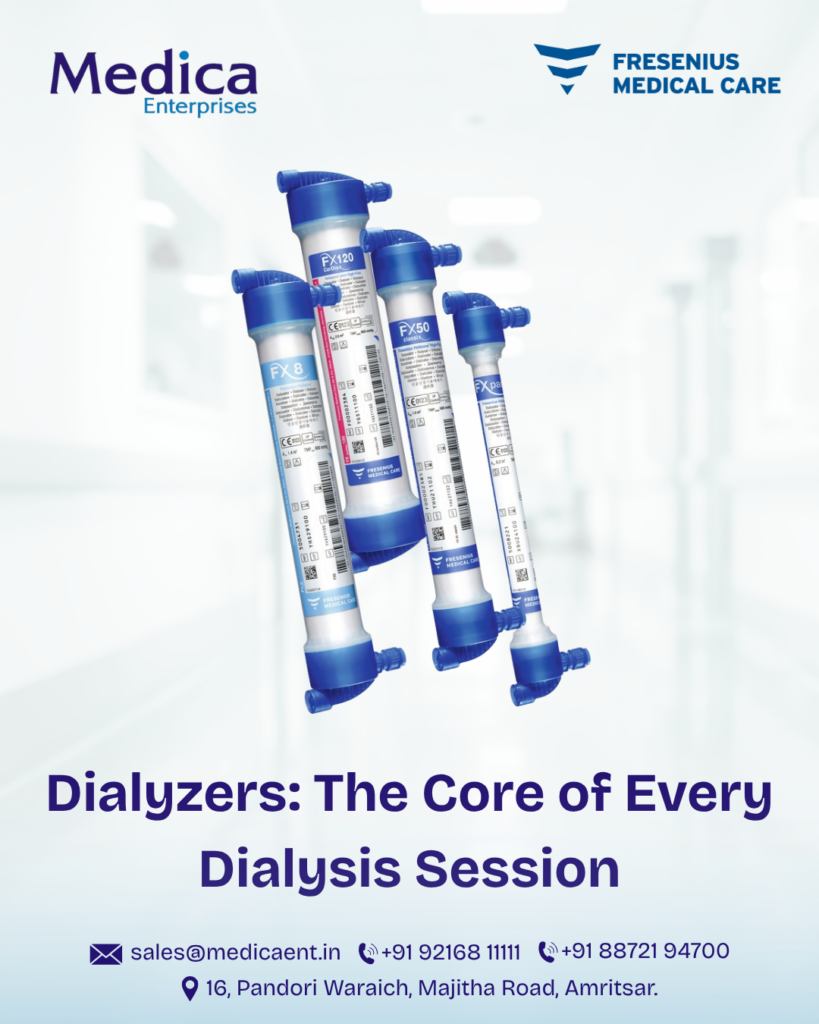
It is composed of thousands of thin, hollow threads made of semi-permeable synthetic membranes like cellulose or polysulfone inside a cylindrical plastic container that is usually 12 inches long and 2 to 3 inches in diameter.
These membranes function as intelligent filters, allowing minor troublemakers like urea, creatinine, and potassium to pass through and be removed while protecting your vital blood cells, proteins, and bigger molecules.
Dialyzers are chosen by doctors based on factors such as your size, the duration of your therapy, and your unique medical requirements; in areas with stringent safety regulations, you can get reusable models that save money or single-use ones to prevent infections.
The best part? Dialysis runs quickly and efficiently since each one can handle an astounding 180–200 liters of fluid in a session.
How do dialyzers work?
Consider the dialyzer as your blood’s advanced cleansing station. Blood is gently pumped from your body through one end of the dialyzer and into thousands of tiny hollow fibers during a hemodialysis session.
In order to maximize efficiency, a unique cleansing fluid known as dialysate flows in the opposite direction around those fibers at the same time. This counterflow setup is similar to two rivers coming together to exchange what is required.
As blood flows through the fibers, waste materials like urea and creatinine—along with extra fluids and salts—sneak past the semi-permeable membrane and into the dialysate through a process called diffusion.
Larger pollutants are forced out by convection through the use of pressure in ultrafiltration. The blood feels more balanced and renewed when it returns to your body after being cleaned.
This device processes 180–200 liters of fluid in a typical 3–4 hour session, simulating the daily function of healthy kidneys. It is dependable, kind to your blood, and revolutionary in the treatment of kidney illness.
Dialyzer Basics Explained
The main part of hemodialysis is a dialyzer, which acts as an artificial kidney to filter waste materials, extra fluid, and electrolytes from the blood of renal failure patients.
Thousands of hollow fibers made of semi-permeable synthetic membranes like cellulose or polysulfone are housed within a cylindrical plastic shell that is about 12 inches long and 2-3 inches broad.
These membranes have tiny pores that allow some minor molecules, such as urea, creatinine, and potassium, to pass through while keeping larger compounds, proteins, and essential blood cells.
Dialyzers are available in reusable models for cost-effectiveness under stringent clinical procedures or single-use disposable models to reduce infection risks. Patient body size, treatment duration, and particular medical requirements are taken into consideration when choosing a dialyzer.
The dialyzer, which can handle 180–200 liters of fluid per session, guarantees efficient therapy that is customized to each patient’s needs.
Inside the Dialyzer: Key Parts Revealed
Each dialyzer has a few clever parts that work together to effectively filter your blood. Here’s a brief summary of the essential details:
- The workhorse is the hollow fiber bundle, which has 10,000 to 15,000 incredibly thin tubes (200 microns wide) that allow waste to escape through microscopic holes in the walls and blood to flow through.
- Outer Housing: A sturdy, 12-by-3-inch plastic cylinder with special ports for dialysate around the sides below and blood in/out on top to keep everything apart and moving smoothly.
- Semi-Permeable Membrane: The gatekeeper is composed of biocompatible materials such as cellulose acetate (gentle and reasonably priced), polyethersulfone (very durable), or polysulfone (excellent for high flow and low clotting).
- Potting Compound & Headers: Prevents leaks and shortcuts by accurately guiding fluids and sealing the fiber ends.
Dialyzers vary by surface area (0.5-2.5 sqm)—bigger ones are for larger patients or tougher sessions.
These bits ensure biocompatibility, high efficiency, and safety, with single-use designs slashing infection odds to near zero. Regular pre-use rinses keep them primed and patient-ready.
Dialyzer Types: Low-Flux vs High-Flux
Your doctor will choose the optimum type of dialyzer for you depending on your health profile, treatment objectives, and kidney condition. The major players are as follows:
- Low-Flux Dialyzers: These dialyzers are ideal for normal thrice-weekly sessions in early-stage patients because they use smaller membrane holes (about 2-3 nm) to concentrate on eliminating basic waste like urea and creatinine.
- High-Flux Dialyzers: These devices target middle-sized contaminants like beta-2 microglobulin, which accumulate over time and cause issues, thanks to their larger pores (up to 10 nm). Long-term users, diabetics, and anyone else in need of quicker, more thorough cleansing will find them perfect.
| Feature | Low-Flux | High-Flux |
|---|---|---|
| Pore Size | Small (basic filter) | Large (deep clean) |
| Best For | Routine dialysis | Advanced CKD |
| Toxin Removal | Small molecules | Small + middle-sized |
| Cost & Use | Affordable, everyday | Premium, intensive |
Why Dialyzers Are a Game-Changer for Patients
In addition to cleansing blood, dialyzers can transform a person’s life by reducing edema, increasing vigor, replacing kidneys when they are unable to do so, and averting serious problems like heart strain or bone problems. Over the course of a normal 3–4 hour session, one unit replaces toxins equivalent to what healthy kidneys handle daily, preserving stable electrolyte levels and fluid balance for better overall health.
In addition to treating chronic renal illness and improving quality of life, patients often report observable improvements such as improved focus, greater appetite, and less weariness in between treatments. When doctors alter dialysis—low-flux for routine maintenance, high-flux for long-haulers fighting inflammation—it becomes more than just a survival imperative.
Conclusion: Mastering Dialyzers for Better Health
The foundation of hemodialysis is made up of dialyzers, which function as artificial kidneys and skillfully filter waste, fluids, and electrolytes to support the health of renal patients. They make treatments efficient and customized with their novel hollow fibers, biocompatible membranes, and choices such as high-flux for advanced demands or low-flux for normal care.
Equipped with this information, talk to your nephrologist about your dialyzer alternatives to maximize your strategy, whether you want to focus on efficiency for long-term care or safety with single-use versions. Let’s hope that informed dialysis care will lead to healthier days in the future. Please share your experiences in the comments.
FAQs
What is a dialyzer?
A dialyzer is a medical device that filters waste and extra fluid from the blood during hemodialysis.
Why is a dialyzer important in dialysis?
It works like an artificial kidney and helps keep the blood clean when the kidneys can no longer do that job properly.
What are dialyzers made of?
They are usually made of a plastic shell with thousands of tiny hollow fibers inside.
What is the difference between low-flux and high-flux dialyzers?
Low-flux dialyzers remove smaller waste molecules, while high-flux dialyzers can remove larger waste particles too.
Are dialyzers reusable?
Some dialyzers are single-use, while others can be reused under strict medical cleaning and safety procedures.